
Minerva Monthly Updates
These monthly updates provide an overview of the new features, bug-fixes, and improvements made to Minerva. DE Systems colleagues work with Anthology (the developers of Minerva) to define user enhancement requests which feed into an ongoing agile development environment.
Please see Monthly Systems Updates for updates to other Digital Education Systems. This page covers Monthly Minerva Updates for the academic year 2024/25. Updates from other academic years can be found at
Minerva Updates Archive 2024/25 Minerva Updates Archive 2023/24 Minerva Updates Archive 2022/23
August 2026
The August update introduces navigation and Gradebook updates, a new content editor option for Minerva Documents, content duplication capabilities, and improvements to Blackboard Tests.
Navigation
Full-page content navigation
Learning modules, folders, and individual content items—such as documents, assessments, links, and media—now open as full pages instead of sliding panels layered over the module outline. This update extends the January move to full-screen course pages so that content inside a module opens the same way.
Breadcrumbs
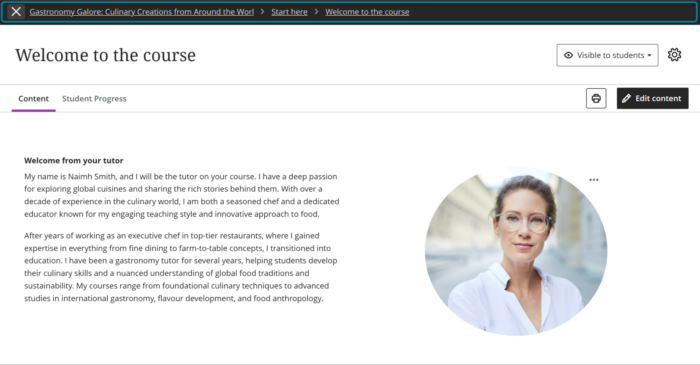
Breadcrumbs now appear on content pages, showing where you are within the module and folder structure to add contextual clarity. Breadcrumbs reflect course structure automatically, require no instructor setup, and complement existing navigation rather than replacing it.
Note: There is a known issue with Breadcrumbs currently. All items appear hyperlinked when some can't be clicked. An update in September should remove the underline, making it clearer they can't be clicked.

Home icon
The Home icon now takes you to your list of modules on Minerva, rather than the My Leeds page.
Gradebook
The Gradebook has had a major update; in particular, the Grades view (called Grid View going forward) has been reworked. Updates relate to the user interface and how information is presented; you should not see changes to functionality.
Different views
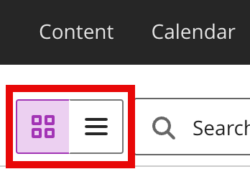
There were 4 views: Overview, Gradable Items, Grades, and Students. Now there are 2 views: Grid View (formerly Grades) and List View (formerly Gradable Items). These icons can be used to switch between Grid View (represented via 4 squares) and List View (represented by 3 lines).
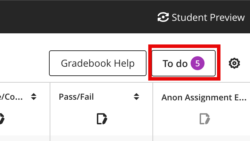
The Overview is available via the Grid View in a To do panel. To do highlights the same information as the Overview did: what needs marking and what grades need posting (returning to students).
The data previously accessed via the Students view can be obtained by clicking on a student's name (in Grid View or List View).
Grades (now Grid View)
This view has been reworked, so will look very different.
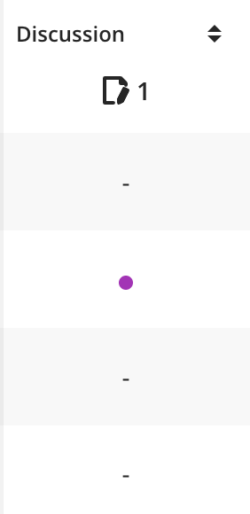
You will notice some new icons. For example, new submissions are indicated by a purple icon:
To grade work, there is a new marking icon which appears under the column header, i.e., the name of the assessment (this will not work for integrated assessment tools such as Turnitin or Gradescope):

There is a new Post icon, also under the column header (this will only be available when there are grades to post):

Some things have moved. Importantly, the Upload/Download Gradebook option is now accessed via the Settings.
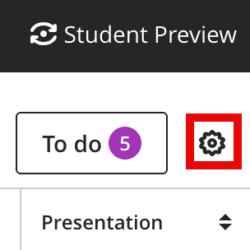
You will also notice the search and filter have moved next to the options to switch views.
If you click column headers (the name of an assessment), an assessment details panel now opens. This highlights key information about the assessment. It is particularly useful for Blackboard assessments, for example, any students with accommodations or exceptions are highlighted here.
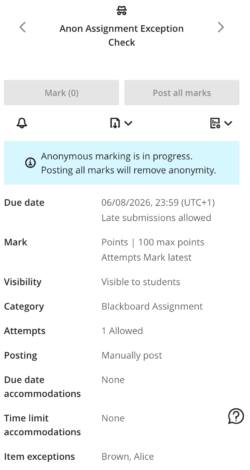
In the new Grid View it is no longer as clear which specific students have had their grades posted and when an assessment item is no longer available to students. We have fed back to our supplier that we would like this to be clearly shown again.
For further information, our supplier has provided us with a side-by-side view of what's changing in Gradebook Grid View (you may see some references to Courses which we call Modules on Minerva).
See our guides on the Gradebook for more help.
Minerva Document - Content Editor (beta)
Our supplier (Blackboard) is introducing a new content editor. At the moment, this is only available in Minerva Documents. You don't have to use the new editor. You are given the choice of using the new editor or 'classic' (current) editor after you select the Content option:

The new editor has improvements, including better options for creating Tables and Lists, and in general provides a better user experience. It's still under development though; these features are not currently available:
- Adding files from Content Collection
- Uploading files from cloud storage providers
- Adding images from a URL
- Creating equations using LaTeX
Our supplier have published guidance on the key differences between the two editors.
Duplicate
Staff can now duplicate items on the Module content page. The duplicate retains all content and settings from the original. LTI items (integrated items like Turnitin and Gradescope) are not supported for duplication.
A new Duplicate option appears in the three-dot icon menu (…) for every item. Selecting Duplicate creates a copy of the item with 'Copy' appended to the name. The copy is hidden from students by default. Staff can rename and edit the copy before making it visible to students.

Blackboard Tests
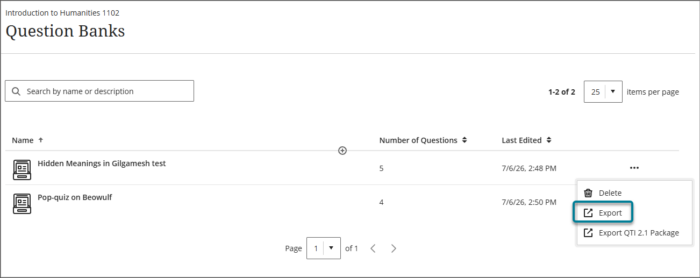
Export Question Banks
It is now possible to export Question Banks which can then be imported into other Minerva modules. This makes it easier to share Question Banks. To export, select the three-dot icon menu (…) and then Export.
Answer-level Feedback
The Minerva June release introduced the answer-level feedback feature. With this update, students will only see answer-level feedback for the answers they selected.
For general information on Blackboard Test, browse our guides.
'Original' module/organisation warning
'Original' is the term referred to the old version of Blackboard modules/organisations. At Leeds, we moved Minerva modules to the latest version of Blackboard for the 2022/23 academic year.
From January 2027, Original modules/organisation will move to 'read only'. Any Original modules/organisation will highlight this forthcoming change to staff when they enter them. Whilst all modules created since 2022/23 are on the latest version, some of our organisations are still on the old version (Original). We have attempted to contact staff enrolled on these organisations to see if they are still in use. If you see this warning for an organisation that is still in use, please contact us via the IT Service Desk so we can support you in moving it to the latest version.
July 2026
The July update brings updates to the module switcher and the Minerva recording tool in feedback/announcements. There is also a new description field for Discussions and Journal, timer option for AI Conversation and Rubric Evaluation Report for Blackboard assessments.
Module Switcher - favourites
The Module Switcher has been enhanced to make it easier to access the modules you use most frequently. Users can now view modules they have marked as favourites directly within the Module Switcher, reducing the need to return to the Modules page.
This update builds on the recent addition of a search.
Read our guidance on how to mark modules as favourites.

Minerva recording tool
The maximum length for recording in Minerva announcements and as feedback for Blackboard assessments, e.g. Assignment and Test, has now been doubled to 10 minutes.
Read our guidance on the Minerva recording tool for more information. Note, this is a separate tool to Panopto, which facilitates more sophisticated video creation as well as lecture capture. Read our guides on Panopto to find out more.
AI Conversations - new timer option
Instructors can create an AI Conversation in Minerva to engage students in a role-play activity with an AI persona. For example, the activity could be to role-play the first day in a new job, a conversation with a historical figure or a healthcare simulation.
Before this update, it was only possible to set a timer on the entire activity (which includes a reflection question). Now it is possible to set up a timer for the specific conversation with the AI persona. The two timer options are mutually exclusive: staff can use one or the other, but not both at the same time. Setting a time limit in one location automatically blocks it in the other, so two timers can never run simultaneously.
If a student has an accommodation set in Minerva, the system automatically adjusts the timer for that student, ensuring fairness.
Read our guide on AI Conversations to find out more about this tool.
Blackboard assessments - Rubric Evaluation Report
Staff can now run a Rubric Evaluation Report directly from the Gradebook for any Blackboard assessment that has a rubric associated with it. This report aggregates rubric data across all student submissions, giving instructors a clear picture of how students are performing against each rubric criterion. The report helps staff identify areas where students are excelling or struggling.
To access the Rubric Evaluation Report, open the Gradebook and locate an item associated with a rubric. The report option is available in the contextual column menu in Grid view and the Gradable Items view (via the item's three dot menu).
June 2026
The June Minerva update brings two new features to Tests.
Lock answer options in a fixed position for multiple choice and multiple answer questions
Staff can now lock specific answer options in a fixed position so they remain in place when other options are randomised. This is useful for answer choices such as 'None of the above' or 'All of the above' that should always appear at the end of the list regardless of randomisation settings.
When creating or editing a multiple choice or multiple answer question, you can designate specific answer options as locked. First select 'Randomise answers' in the Test Settings, then select the lock icon next to the answer option. Locked options remain in their set position during randomisation while all other options shuffle as expected.
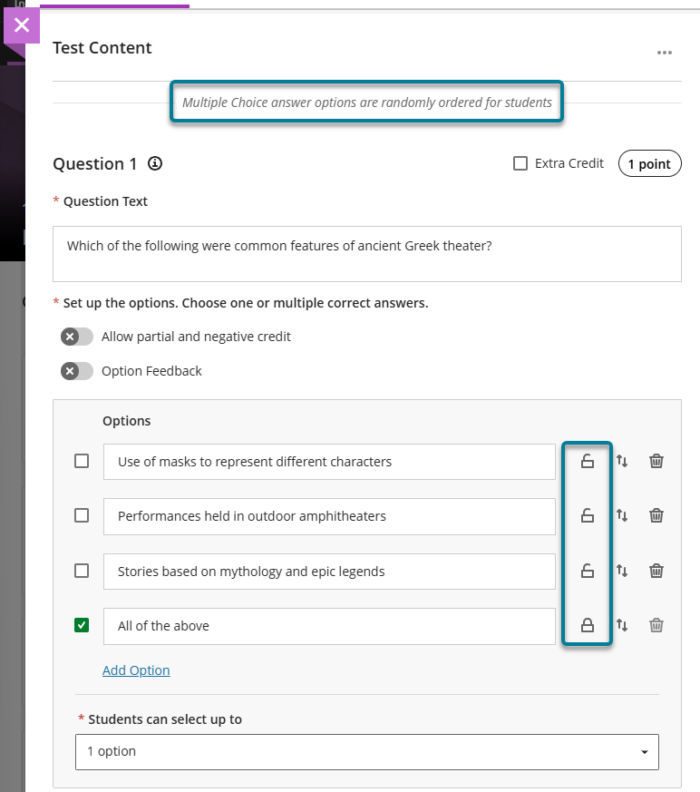
Instructors can remove a lock any time while editing the question before students have submitted attempts. Once students have submitted attempts, locking and randomisation settings are fixed and cannot be changed to ensure fairness.
Provide answer-level feedback for multiple choice and multiple answer questions
Staff can now add feedback for each answer option in multiple choice and multiple answer questions. This helps students understand why each choice is correct or incorrect after an attempt is submitted.
When creating or editing a multiple choice or multiple answer question, staff can turn on 'Option Feedback', which prompts Feedback textboxes to appear beneath each answer option. Instructors can enter the answer options and feedback for any of the options.
At this time, option-level feedback is displayed to students for all answer options. We have been advised that in a future release, students will only see option level feedback for the answers they select.

May 2026
The May Minerva update includes new functionality in the module switcher, a change to how discussion due dates appear in the Gradebook, and an improvement with group filters being respected when grading Blackboard Assignments/Tests. Release conditions inherited by items in learning modules and folders are now highlighted when reviewing an item's release conditions. Finally, Discussions which are hidden within a learning module or folder are no longer available within the Discussions tab.
Module switcher search

Second discussion due date visible in Gradebook
- Overview
- Gradable Items

Gradebook Group filter and grading of Blackboard Assignment/Test
When a group filter is applied in the Gradebook Grades view, the same filter is now applied in the grading interface by default. Only students from the selected group are shown, and the active group filter is displayed. This can be useful if staff only want to grade students within a certain group.
To apply a filter, go to the Grades view in Gradebook and look for the Filter option (above the table of assessment items):

This change does not apply to assessments that are marked anonymously. Delegated grading workflows can be utilised where there is anonymous marking.
See our guide on how to create groups in a Minerva module to utilise this workflow. If you are interested in delegated grading, see either our guide on Blackboard Assignment or Blackboard Test.
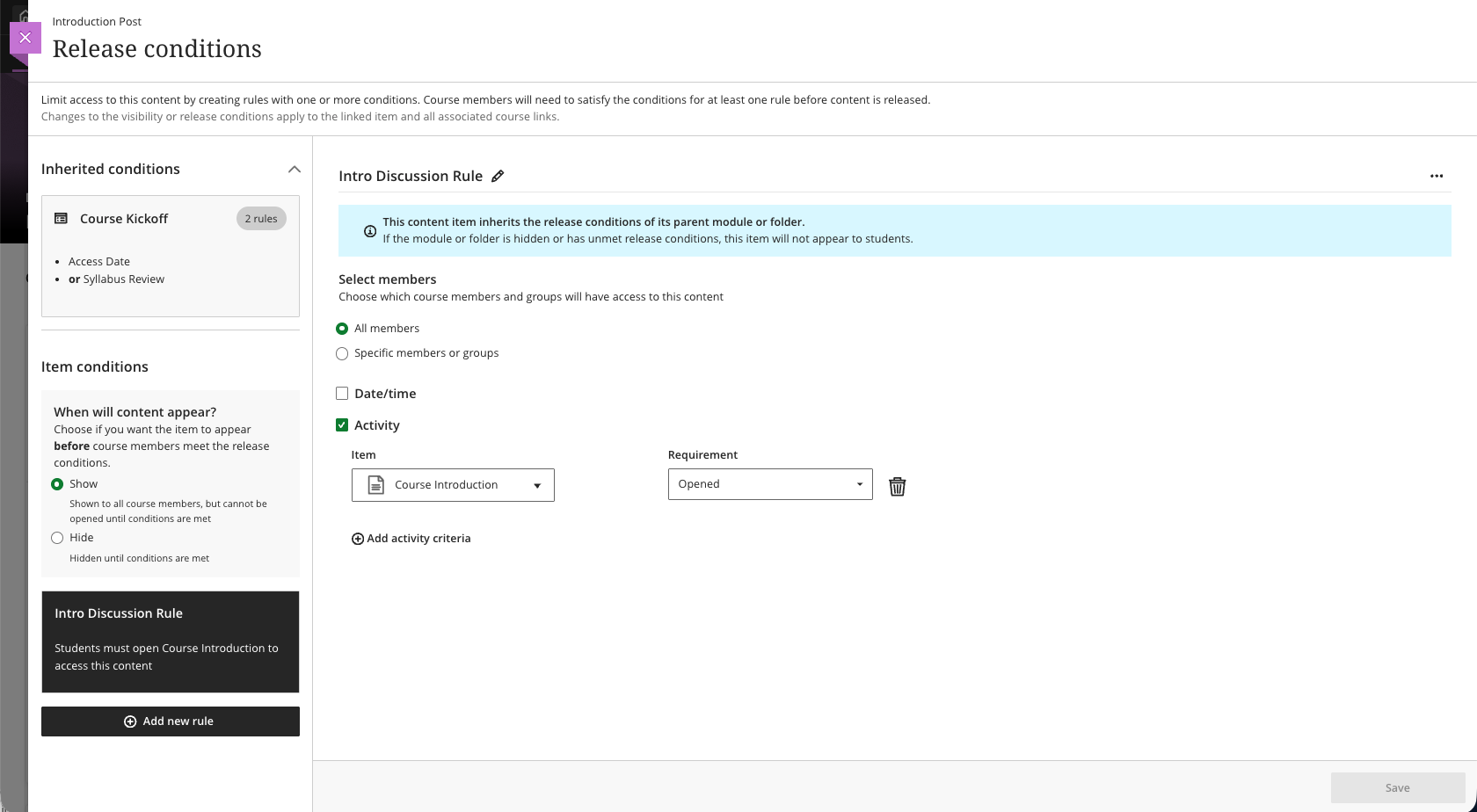
Release conditions inherited from learning modules and folders
When instructors open the Release Conditions panel for an item inside a learning module or folder, a read-only summary of any conditions inherited from the parent container appears alongside any conditions applied directly to the item. This helps instructors understand the full set of access rules in place and determine whether additional conditions are needed.
Visibility of Discussions
Discussions that are hidden within a learning module or folder are no longer accessible from the Discussions tab. Discussions now follow the release conditions applied at the learning module/folder level.
April 2026
The April update introduces a number of new features and improvements, including: the option to specify the assignment type for Blackboard Assignments; some changes to how multiple choice/answer questions work in Blackboard Tests; improvements to the flexible grading interface used for most Blackboard assessments; the addition of 'substantive' and 'non- substantive' labels that are applied to posts when staff mark Discussions; an option to limit the number of messages a student can create when interacting with an AI Conversation; new options to change playback speed in the Minerva recording tool; and an improvement to how images are handled in emailed Announcements.
Blackboard Assignment - specify the assignment type
There are new options when setting up a Blackboard Assignment. These allow you to specify whether the student uploads a file for the submission or uses the editor (or you can allow both options). In the settings, you will see these new options in the Submission Details section.
Select File Upload if you just want students to upload files, and select 'Editor (text, video)' if you want students to use the editor (note, to submit video, students must use Panopto - our new platform for Media Enhanced Learning and lecture capture which will replace Mediasite in 2026-27). Read our blog for more information about Panopto, this includes information on how to become an early adopter.
Read our guide on Blackboard Assignment for more information on this tool.
Blackboard Test - multiple choice/answer questions
A recent update meant that you could specify how many answers a student could select, with the default being 4. Following feedback, this update changes the default to 1. If there is more than one correct answer, this is flagged in the interface, prompting you to change the number of answers a student can select.
Flexible Grading Interface (used for Blackboard Assignment/Test)
Name display
The name display format is now linked to the selected sort order. By default, student names are now shown as 'Surname, First Name' to help instructors quickly locate students. When sorting by 'First Name (ascending or descending)', names display as 'First Name, Surname.'
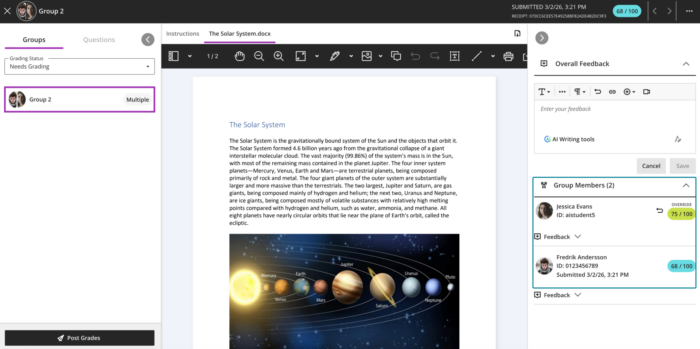
Group Assessment
It is easier to adjust grades for an individual student within a group submission, which can now be done in the Flexible Grading interface. In the Group Members section, individual grades can be entered. The student sees this grade only, instead of the grade for the overall group.
Discussions - substantive and non-substantive labels
When grading Discussions, staff now see 'substantive content' and 'non-substantive content' labels as an aid to the marking process.
AI Conversations
When creating an AI Conversation, it is now possible to specify how many messages a student can post. This can help students understand how many interactions are expected for the activity.
As part of the student instructions, there is an option to enter the maximum number of messages possible under Conversation Constraints:

As a student undertakes the activity, they will see a countdown of the messages they have remaining.
Read our AI Conversations guide for more information.
Announcement Emails - image handling
Announcement emails now display previews of images included in an Announcement. These image previews replace the previous image links that appeared as filenames in the email. When users select an image, it opens on a separate page for a larger, more detailed view. This update makes announcement content clearer and easier to understand directly from the email.
To navigate to the announcement within Minerva itself, users can select View Announcement in the email message.

Minerva recording tool
This tool is in Announcements and can be used to give feedback in Blackboard assessments.
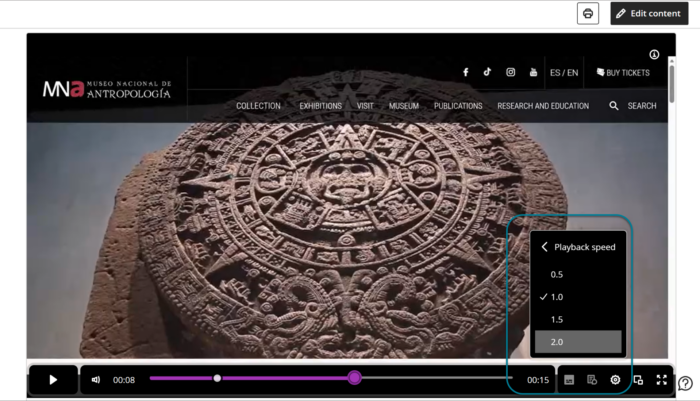
When users watch a recording, they can now choose from predefined speed options such as 0.5x, 0.75x, 1x, 1.25x, 1.5x, and 2x. Playback starts at 1x speed, and users can switch speeds at any time. Speed controls appear clearly in the player and work with mouse, keyboard, and touch interaction. The experience is consistent on desktop, tablet, and mobile devices.
Read our guide on the recording tool for more information.
March 2026
The March update includes the introduction of AI‑generated Knowledge Checks, updated participation requirements for discussions, improvements to Blackboard Test and the Recording tool.
Minerva Documents - Generate Knowledge Checks with AI
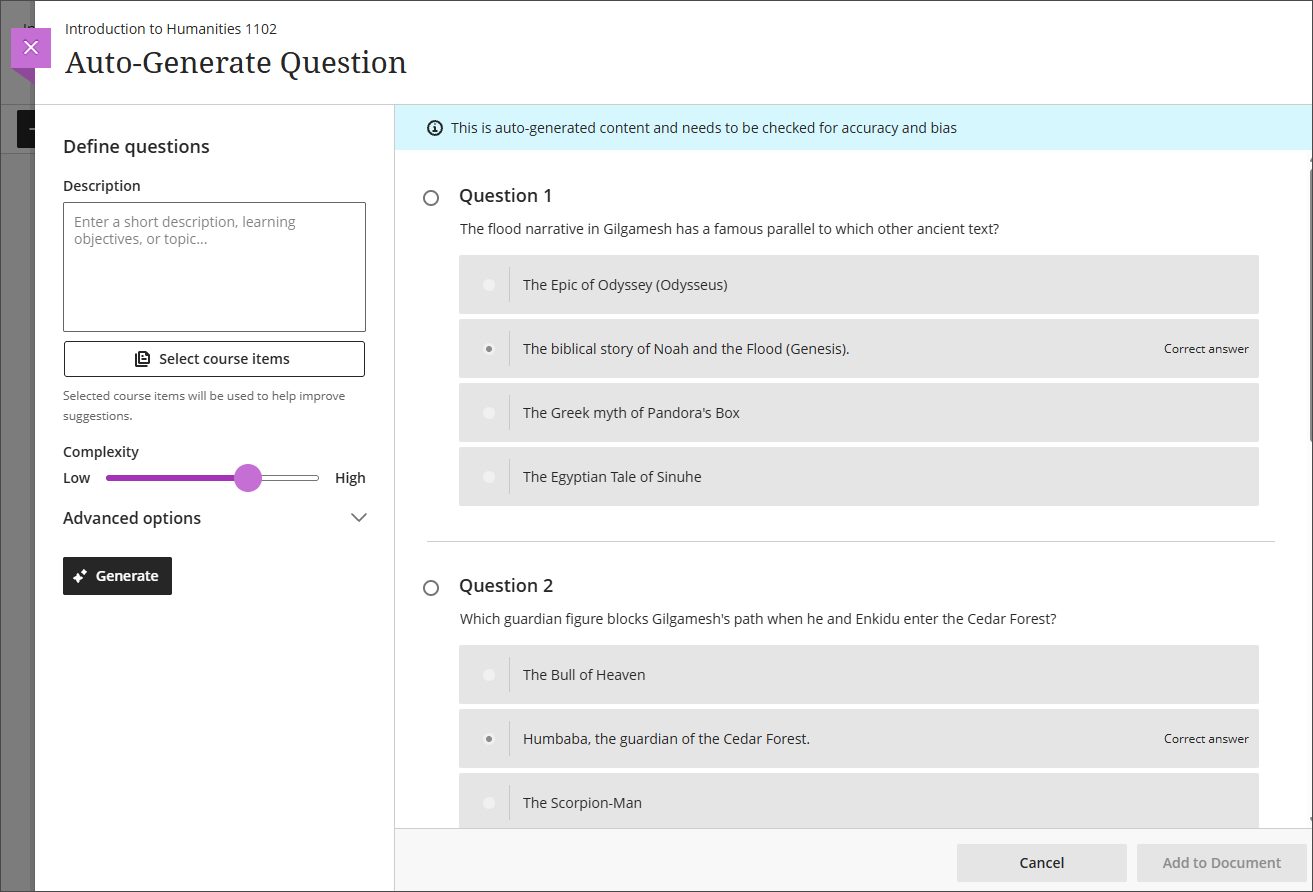
Staff can now use AI tools to generate draft Knowledge Check questions within Minerva Documents. Once generated, staff can review, edit, and approve the questions before making them available to students.
When adding a Knowledge Check to your Minerva Document, you will now see options to either 'Enter my question' or 'Auto-generate question'.
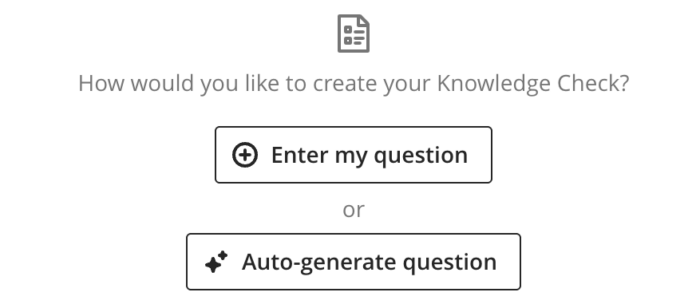
If you select 'Auto-generate question', the AI will generate questions based on your module name and content in the Minerva Document. If you prefer, you can add text to the Description text box or reference items in your module to inspire the AI. Select questions you wish to add to your Minerva Document. They can be edited after this step.
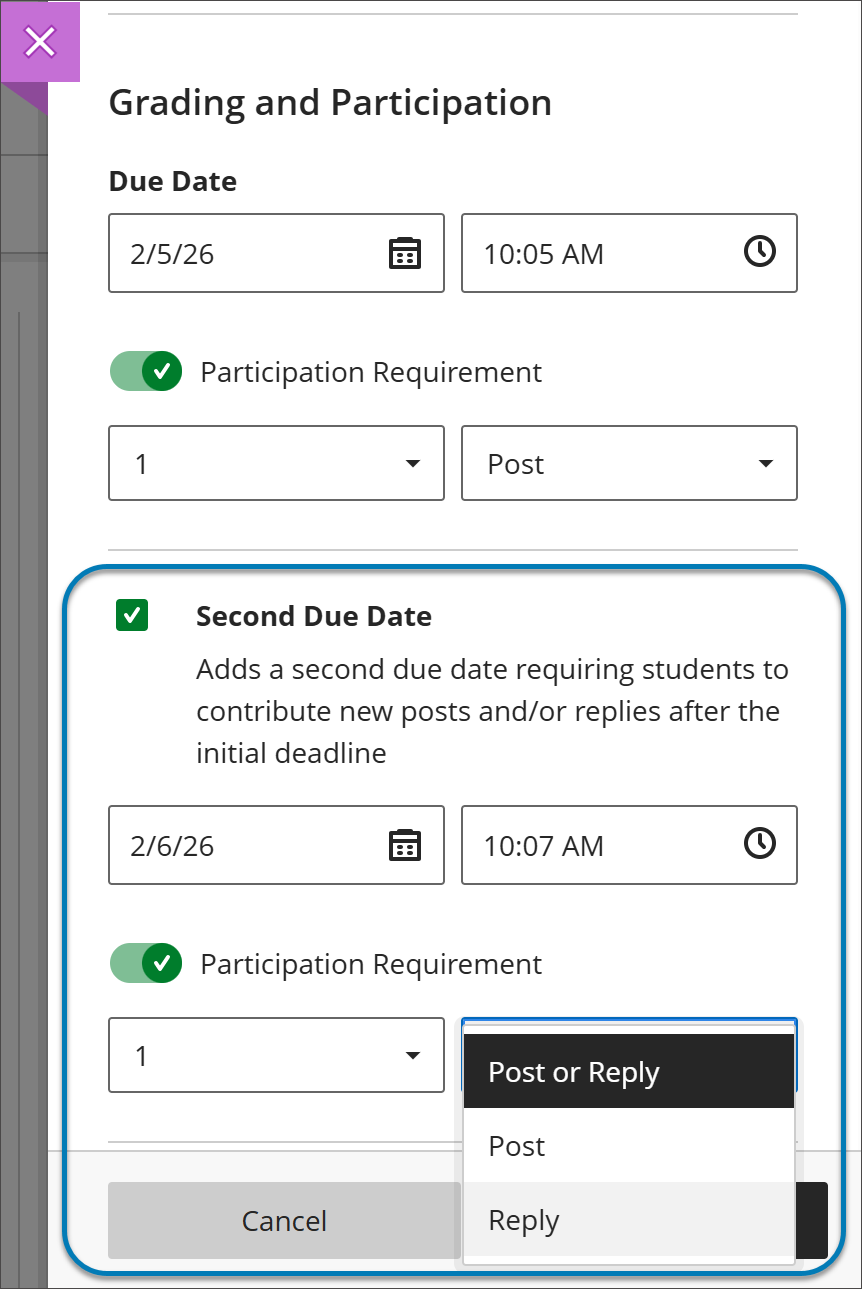
Second participation requirement and due date for discussions
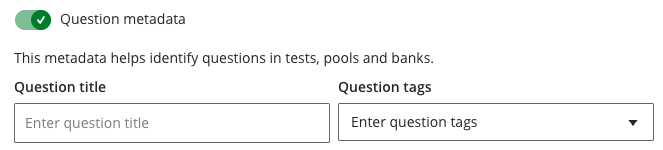
Blackboard Test | Question title field relocated
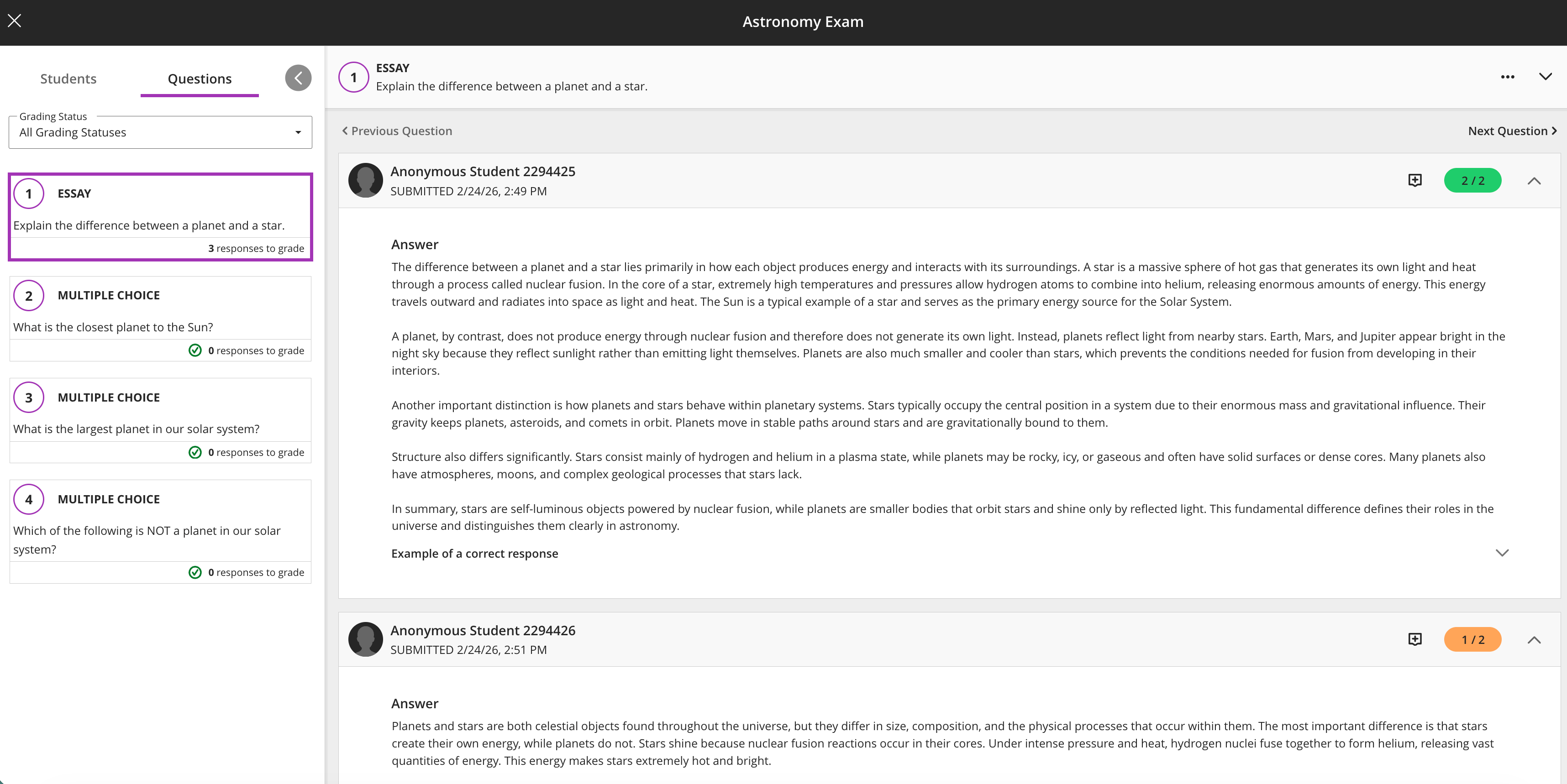
Blackboard Test | Anonymous grading by question
Recording Tool
- The Recording tool now displays the maximum recording time in both full and minimised views, giving users a clearer sense of time remaining to reduce the risk of unexpected cut‑offs.
- When users create a video/screen recording, the system captures a thumbnail image from the video ten seconds into the recording (and zero seconds for a recording under ten seconds). The thumbnail appears wherever the recording appears, so users can quickly recognise and identify video content before opening it.
February 2026
In the February update, there are updates to Minerva Documents and the Banner image.
Stack blocks vertically in Minerva Documents
Instructors can now stack blocks in a single column in Documents to create cleaner layouts and reduce whitespace. A new toggle in the block toolbar allows switching between column-level and block-level editing. In column mode, actions apply to the entire column. In block mode, instructors can resize, move, or delete individual blocks.
Columns can also be dropped into another block’s area for more flexible layouts. These changes work with existing features such as undo/redo, printing, and AI layout generation. This enhancement also includes accessibility improvements for screen readers.
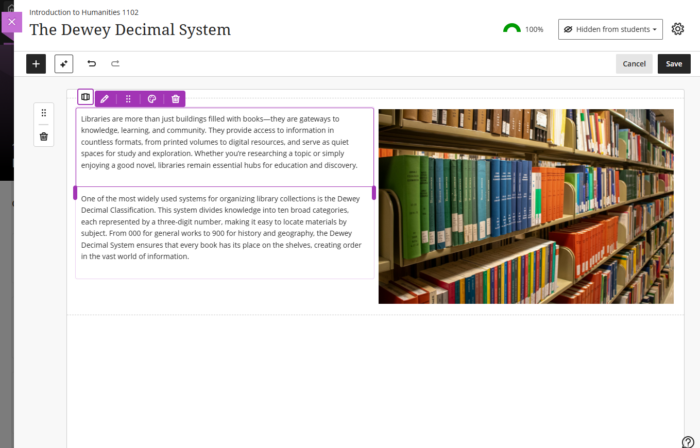
Module/Organisation Banners
Any module or organisation can have a Banner (an image that displays at the top of the module content page). In the January update, the module name/id was displayed at the bottom of the Banner with a dark gradient to ensure the text had sufficient contrast with the image (to make it accessible). However, following feedback, our supplier has changed this slightly so that there is now only a dark gradient behind the text (before it covered most of the image).
Our supplier is working with clients to see if further changes are needed. If you have further feedback on the Banner image display, please contact us at [email protected].
January 2026
In the January update, there are updates to navigation in Minerva, expanded options for True/False questions and some changes to multiple choice/answer question workflows. Large tests will also load more quickly.
Navigation changes
The changes are part of a series of enhancements planned throughout 2026 to improve the user experience for both staff and students. They include:
- full-screen pages reducing visual clutter for items in the navigation bar such as Content, Calendar, Announcements, Discussions, Gradebook and Groups
- a module switcher function, allowing you to quickly move between your four most recent modules and giving you access to your full module list
- where there is a module banner this is now full-width displaying the module name and ID freeing up vertical space and improving contextual clarity
The module navigation bar will also now display above the banner (above the module name and ID where there is no banner) and a new Home button will take you to the My Leeds page in Minerva.
All changes will also apply to your Minerva organisations.
You can access a short video or read detailed guidance for more information.
Blackboard Test | True/False Questions
The options for responses to his question type have been expanded. Previously, you could only give students the option to select True or False. Now, you can select from the additional responses:
- Yes/No
- Right/Wrong
- Agree/Disagree
Blackboard Test | Multiple Choice/Answer Questions
Following feedback, the default responses for these questions will now be 4 rather than 3.
Staff can now also define the number of answers a student can select. Previously, if there was only one answer, students could only select one. If there was more than one answer, student could select all answers.
When you create a new question, the default configuration will be:
- 4 answer options
- students can select up to 4 answers
However, you can define the number of answers required and adjust how many options a student can select.

The student view of these question types has also been updated. Previously, it was not visually clear to students if they could only select one answer. Now, for questions where students can select only one answer, the selection mechanism is radio buttons. For questions where students can select more than one answer, the selection mechanism is checkboxes.

Blackboard Test | Load times for large Tests
The rendering of MCQ and True/False questions has been optimised, significantly improving load times for large tests. For example, a 200-question test now loads in ~5 seconds, down from ~25 seconds, which equates to an 80% improvement.
December 2025
In the December update, there are improved audio/video options for feedback in Blackboard Assessment tools (e.g. Assignment, Test), as well as improvements to Discussions, the MathJax integration and a new option for conditional availability. There are also some improvements to how Groups display when there are no members, and staff now see the Learning Modules table of contents (available to students since August).
Audio/Video Feedback for Blackboard Assessments
The technology used to create audio/video in feedback for Blackboard Assessments has been updated. Improvements include a transcript and an option to record from screen. It is also now possible to record your screen and camera at the same time.
When you select the record option, you will see these options available:

For further help, see our Using the Recording Tool in Minerva guide.
Discussions
Instructors can now make clear participation requirements to students for graded Discussions. Instructors can set the number of posts and/or replies each student is required to create.

The status of participation requirements is updated through to completion, giving students a clear understanding of progress made. Participation requirements are linked to Progress Tracking, so that will be accurately displayed for students to monitor.
This update does not affect the grading interface or workflows.
Read our guide on Discussions for more information about this tool.
Conditional Availability improvements
In Minerva, you can restrict access to content via Conditional Availability (using criteria such as user, date or interaction with assessments). With this update, you can also specify access by interaction with content. For example, you can release content based on whether someone has accessed another item - eg, Document or link.
Read our guide on Conditional Availability to find out more.
Groups
Previously, where there were Group submissions for a Blackboard Assignment, it was not obvious if the Group had no members. Now, however, Groups are flagged as having no members on the submissions page.

Learning Modules - Table of contents
Learning Modules can be used to structure content in Minerva (like a folder). Staff will now see a table of contents to help them move between items more easily in Learning Modules (this update came to the student experience in August).
MathJax
MathJax support in the Content Editor now includes additional LaTeX delimiters for rendering mathematical formulas. This update improves compatibility with standard STEM workflows and simplifies uploading exam content without changing source files.
Instructors and students can now use:
- \(...\) for inline equations
- \[...\] for display equations
These options are in addition to the existing $ delimiters.
November 2025
In the November update, there are improvements to Tests and Gradebook.
Bulk Edit Points in Tests
Before this update, you could only update point values one at a time. Now you can update point values for multiple questions in tests using new bulk editing options. This enhancement supports:
- Selecting all questions at once, with the option to deselect specific questions if desired.
- Selecting specific questions (e.g., question 1, 4, 9, 15, 16, 27, and 32) for targeted point value adjustments.
- Selecting questions by type (e.g., all True/False questions) to apply consistent point value changes across that question type.
- Selecting questions by type AND specific questions.
To access the bulk edit points option, open the Test and select the three dot menu next to the heading 'Test Content':

Then select bulk edit points from the menu:

Use the filters to refine questions to specific question types as relevant and select the questions you wish to change (individually or use select all). Use the Points field to enter the new points required. Remember to select Update to make the change.

Once you have made changes, the bulk edit points interface will close.
Read our guides on Blackboard Tests if you would like to find out more about this tool.
Gradebook - Download options
In a recent update, an option to hide Gradebook items from the staff view was introduced. In the Download Options, under 'Full Gradebook', you can now select whether to 'Include Hidden Items':

Gradebook - Grade View
The Gradebook Grade view has been updated to streamline access to submission pages from column headers on the Grades page.
Changes include:
- Blackboard Assignments, Tests, Forms, Discussions, Journals:
- Replaced the Edit option with a View Submissions option using the eye icon.
- Renamed the grade cell menu option from View to View Submission.
- SCORM Items:
- Added a View Submissions option with the eye icon.
- Renamed the grade cell menu option to View Submission.
- Removed Edit and Preview SCORM options from the column header menu.

October 2025
In the October update, there are improvements to Blackboard Tests.
Add metadata to Blackboard Test Questions
You can now add tags to questions, which can be useful if you plan to use Blackboard Tests extensively and wish to search your existing questions.
To use tags, switch on the Question Metadata option when you create a question:

You can add new tags (enter a tag and select Create "tag name") or select from a list of existing tags.
Fill in the Blank Questions - Student experience
Fill in the blank questions now display the blanks inline with the surrounding text, whether the question is presented as a sentence, paragraph, or table. Previously, the blanks displayed underneath the question.

Test Settings - consistency to workflows
To improve consistency, Test settings now utilise Save and Cancel actions. Previously, some had an X icon or an option to Close/Continue.
September 2025
In the September update, there are new styling options for Minerva Documents, more options to improve the management of test questions, a minor change to Announcement creation and some improvements to group marking features for group submissions to Blackboard Assignments and Tests. Early in September, MathJax was also implemented in Minerva to render LaTeX. The Ally instructor feedback workflow has also been improved.
Minerva Documents - Block Styling
Documents now have an option to add styling to specific content blocks. The options are:
- Question: Use for prompts or reflective questions.
- Tip: Use for tips, insights, or helpful suggestions.
- Key points: Use to highlight key points or essential facts.
- Next steps: Use for next steps or instructions.
The styling option adds colour to the border of a content block and an icon to highlight it. For example, in this image the Key points option has been used:

To add styling, go to the Document and click the Edit content option. Hover the mouse over the relevant content block. Select the styling (palette) icon and you will see the styling options plus a reset option which is for removing applied styling.

See our guide on Minerva Documents for an overview of this tool and links to further information.
Minerva Tests/Forms/Question Banks - Option to use titles
When adding questions to Minerva Tests, Forms, or Question Banks, there is now an option to add a title. These are not seen by students and are only seen by staff during the creation process; i.e. they are not seen when grading. The advantage of inputting titles is that they are searchable when selecting options to reuse questions. Therefore, if you intend to reuse questions/utilise Question Banks, this may speed up processes, especially if you have a large set of questions.

Creating Announcements - minor change
The unnecessary recipients dropdown has been removed from the 'New Announcement' page. Previously, this dropdown only offered one option—sending to all module members—making it redundant.
Improvements to Group submission marking workflows for Blackboard Assignment/Test
Assignment
Staff can now use the pop-out rubric when grading group submissions. This update brings the same grading experience already available for individual submissions to group work.
The pop-out rubric is a separate, moveable window and formatted in a grid view. Previously, the rubric was only available in a side panel and formatted in a stack.
The option to pop out the rubric is available above the rubric in the marking interface.

Test
If using Group submissions for Tests, it is now possible to give bespoke feedback on each group's answer when grading. To do this, select the add feedback icon which appears above their answer, next to the question score:

Implementation of MathJax
MathJax now renders LaTeX when entered into the Minerva content editor. For more information, see our post on MathJax.
Ally PDF Quick-Fixes
Ally now supports fixing several PDF accessibility issues directly within the Instructor Feedback workflow. Optical Character Recognition (OCR) scanning, adding missing titles and language attributes can now all be done directly via the Ally interface. Instructors can review the change and download the original file before you apply the fix, so control remains with the content owner.

Looking for older updates? Minerva updates from other academic years can be found at
Minerva Updates Archive 2022/23 or Minerva Updates Archive 2023/24 or Minerva Updates Archive 2024/25.